The Arabian Sea's Record Storms: Gonu 2007 and Kyarr 2019
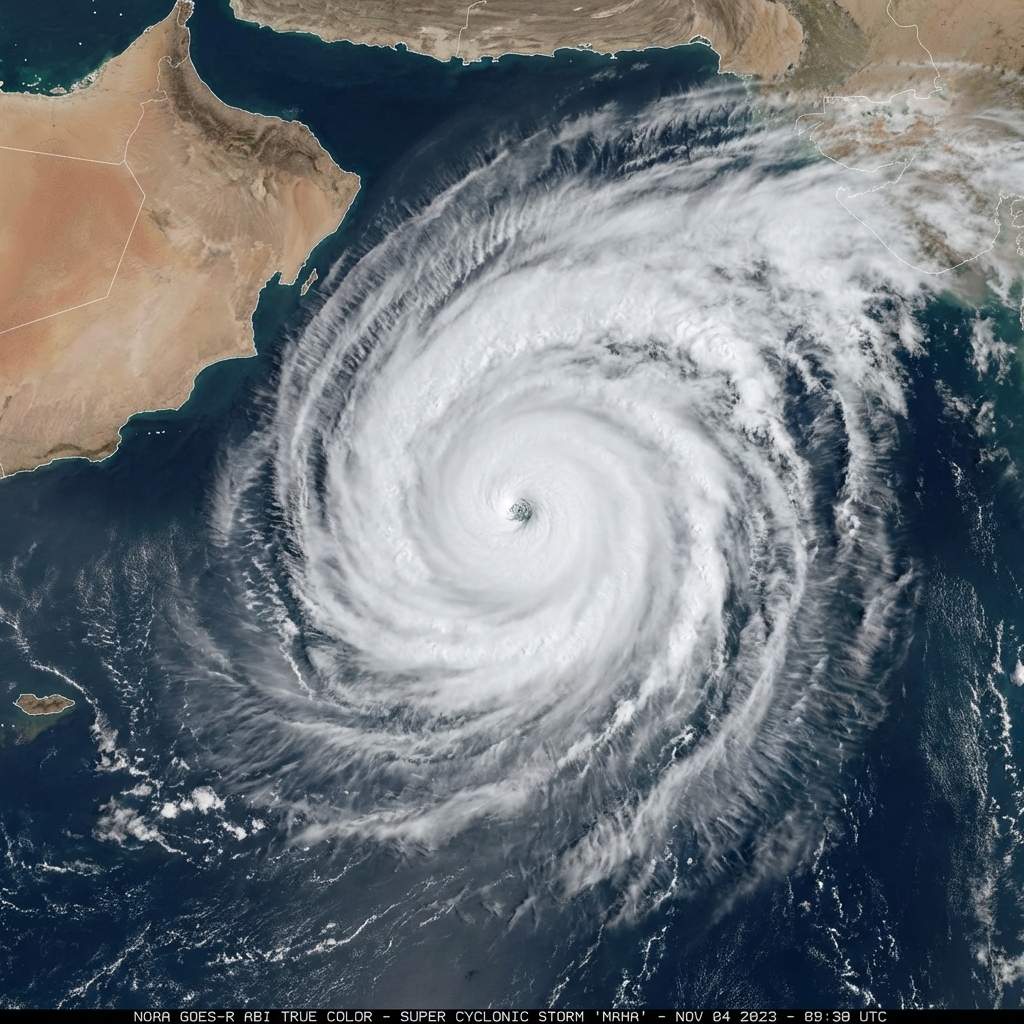
A Basin Not Known for Giants
The Arabian Sea usually produces weaker, shorter-lived cyclones than the Bay of Bengal. Two storms broke that pattern, and both reached Super Cyclonic Storm strength with IMD sustained winds of 240 km/h.
Gonu (June 2007)
Gonu formed in the eastern Arabian Sea on 1 June 2007 and intensified rapidly, reaching 240 km/h with a minimum pressure of 920 hPa. It was the first Category 5 equivalent cyclone recorded in the Arabian Sea.
It weakened before it hit land. Gonu crossed the eastern tip of Oman, near Ras al Hadd, on 6 June at about 164 km/h. It then moved along the Gulf of Oman toward Iran. The cyclone killed 78 people and caused about 4.42 billion US dollars in damage, including 28 deaths and about 216 million dollars in damage in Iran.
Kyarr (October-November 2019)
Kyarr formed on 24 October 2019 and quickly reached Super Cyclonic Storm strength, matching Gonu's 240 km/h with a minimum pressure of 922 hPa. It stayed over the open sea and never made landfall. Five deaths were recorded, all indirect, and damage was minimal. It did raise rough seas along India's west coast, from Maharashtra to Gujarat.
Why It Matters for India
The west coast of India, with its dense ports and cities such as Mumbai, is far less used to cyclones than the east coast. The rise of strong Arabian Sea storms is a reason to keep preparation and warnings strong on both coasts.
Compare both storms on the Super Cyclones page, or read why the two basins behave so differently.