Is Climate Change Making Indian Cyclones Stronger?
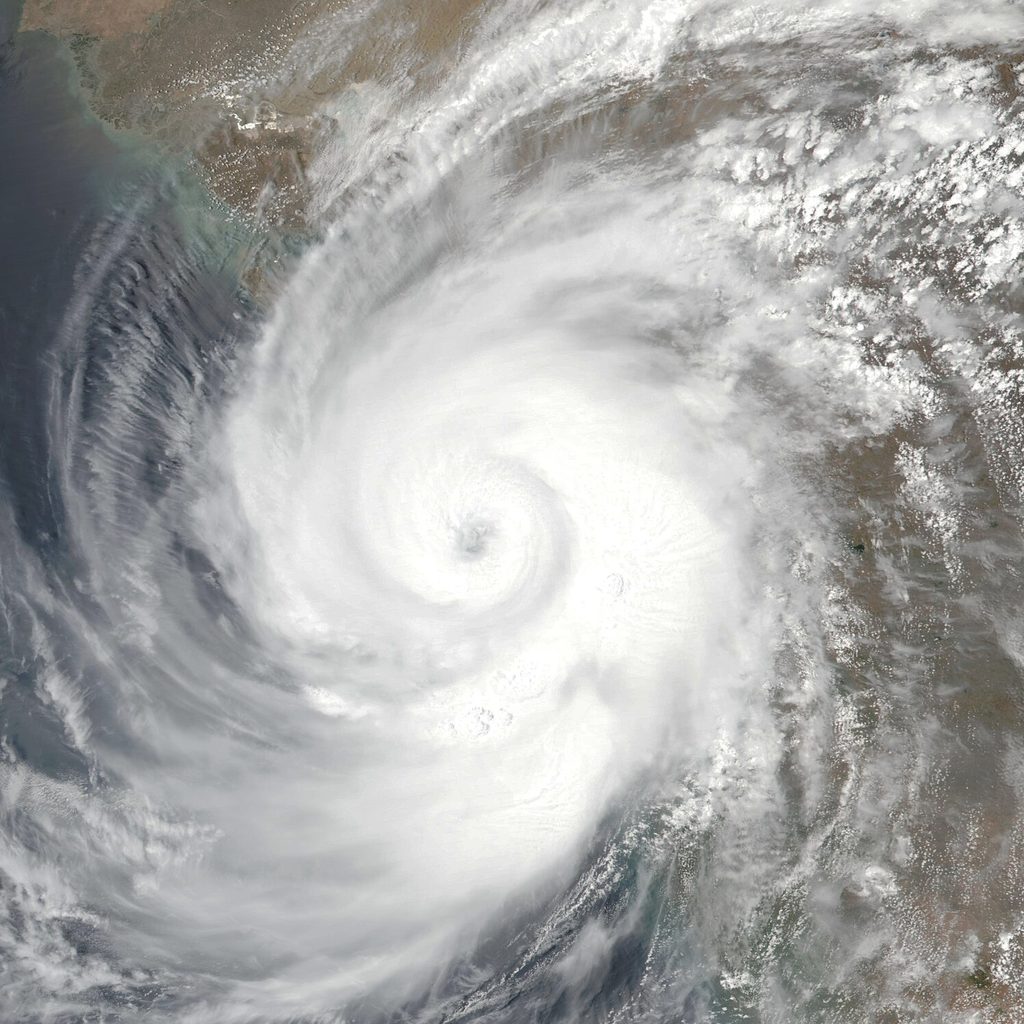
In just a few years, the Arabian Sea, once seen as the quieter of India's two seas, produced the super cyclone Kyarr (2019), the powerful Tauktae (2021), and Biparjoy (2023), which lasted almost two weeks. In the Bay of Bengal, Amphan grew into a super cyclone in little more than a day. Many people now ask: is climate change making cyclones worse?
The honest answer is: in some important ways, yes. But the picture is more nuanced than headlines suggest. This article explains what scientists are confident about, what is still uncertain, and what it means for people living on India's coasts.
Cyclones Run on Warm Water
A tropical cyclone is a heat engine. It draws energy from warm ocean water, generally above about 26.5°C, through evaporation. As moist air rises and condenses into cloud, it releases heat that powers the storm. We explain this in How Do Tropical Cyclones Form?
The Indian Ocean has been warming faster than most of the world's tropical oceans. Warmer water, and warm water reaching deeper below the surface, means more fuel for cyclones. But warm water is only one ingredient. Wind shear, moisture in the air and large-scale weather patterns also decide whether a cyclone forms and how strong it gets.
What Scientists Are Fairly Confident About
1. The Arabian Sea Has Become Much More Active
For most of the last century, the Bay of Bengal produced about four times as many cyclones as the Arabian Sea. That gap has been narrowing. A widely cited study from the Indian Institute of Tropical Meteorology (IITM), Pune, published in 2021, compared 1982-2000 with 2001-2019 and found:
- About a 52% increase in the number of cyclones in the Arabian Sea
- About a 150% increase in very severe cyclones in the Arabian Sea
- A large increase in how long Arabian Sea cyclones last
- A small decrease in the number of cyclones in the Bay of Bengal
The researchers linked these changes to the warming of the Arabian Sea. The 2019 season was a striking example: the Arabian Sea produced five cyclonic storms (Vayu, Hikaa, Kyarr, Maha and Pawan), one of its most active seasons on record, including the super cyclone Kyarr.
This matters for Gujarat, Maharashtra, Goa, Karnataka and Kerala, as well as Pakistan and Oman, which historically saw fewer severe storms than the east coast. Read more in The Arabian Sea's Record Storms and Bay of Bengal vs Arabian Sea.
2. Storms Are Intensifying Faster
Rapid intensification is when a cyclone's maximum sustained winds rise by about 55 km/h (30 knots) or more within 24 hours. It is one of the most dangerous things a cyclone can do, because a storm that was expected to be moderate can be very severe by the time it reaches land.
- Ockhi (2017) grew from a depression to a cyclone in less than a day close to Sri Lanka and southern India, catching hundreds of fishermen at sea.
- Amphan (2020) strengthened from a cyclonic storm into a super cyclone in about a day over an unusually warm Bay of Bengal.
- Tauktae (2021) intensified quickly along India's west coast before hitting Gujarat.
Warmer seas, especially warm water extending deep below the surface, make rapid intensification more likely. Studies of the North Indian Ocean and other ocean basins show rapid intensification becoming more common, and the Intergovernmental Panel on Climate Change (IPCC) expects this trend to continue as oceans warm.
3. Rising Seas Make Every Storm Surge Worse
This is the most certain link of all. The sea level along India's coast is rising, and it is rising faster in some places, such as the Sundarbans, where the land is also sinking. A higher sea means every storm surge starts from a higher level and reaches further inland. Even a cyclone no stronger than one from the past can now flood more land.
4. Cyclones Bring More Rain
Warmer air holds more moisture, about 7% more for every 1°C of warming. The IPCC has high confidence that cyclone rainfall rates are increasing. For India, this means more flooding from cyclones and from the depressions they weaken into, often far inland.
What Is Still Uncertain
- Total number of cyclones: globally, scientists do not expect more cyclones overall, and some models suggest slightly fewer. The expected change is in their strength, not their number.
- Short records: reliable satellite records go back only to the late 1970s and early 1980s. That is short for separating long-term climate change from natural ups and downs.
- Natural variability: patterns such as the Indian Ocean Dipole (IOD), El Niño and La Niña, and the Madden-Julian Oscillation (MJO) strongly affect cyclone activity from year to year. A single active season cannot be blamed on climate change alone.
- Single storms: scientists cannot say climate change "caused" a particular cyclone. They can say that warming made some of its features, such as its rainfall or intensification, more likely or more extreme.
- Air pollution: some research suggests that aerosols from air pollution over South Asia may have affected wind patterns over the Arabian Sea, alongside warming. This is still being studied.
The Good News: Fewer Deaths Despite Stronger Storms
Even as cyclones become more intense, India has become far better at saving lives:
| Cyclone | Year | Peak strength (IMD) | Deaths |
|---|---|---|---|
| Odisha Super Cyclone | 1999 | Super Cyclonic Storm, 260 km/h | About 9,900 |
| Phailin | 2013 | Extremely Severe, 215 km/h | 46 |
| Fani | 2019 | Extremely Severe, 215 km/h | 81 (India and Bangladesh) |
Phailin and Fani both hit Odisha, as the 1999 storm did. The difference was accurate IMD forecasts days ahead, a network of multipurpose cyclone shelters, trained local volunteers, and the evacuation of around a million people before each storm. Read the full story in Three Storms, One Coast.
The lesson is that a growing hazard does not have to mean a growing death toll. But stronger, faster-intensifying storms leave less time to warn and evacuate, and the economic losses from damaged homes, crops, boats and infrastructure are still rising.
What This Means for You
- West coast residents: do not assume the Arabian Sea is the "safe" side. Prepare for cyclones as seriously as people on the east coast do.
- Act on early warnings: rapid intensification means a storm can become much stronger than first forecast. Take watches and alerts seriously, and do not wait to see how bad it gets.
- Respect storm surge: with higher seas, low-lying coastal areas are more at risk. Know your evacuation route.
- Prepare for floods: heavier rainfall means even weak systems can cause serious flooding inland.
- Protect natural defences: mangroves, such as those in the Sundarbans and Bhitarkanika, reduce storm surge and wave energy. Protecting them protects coastal communities.
Get ready with our Cyclone Emergency Kit Checklist and What to Do During a Cyclone.
Key Points to Remember
- The Arabian Sea has become much more active, with more very severe cyclones.
- Cyclones are intensifying faster and bringing more rain as oceans warm.
- Rising sea levels make storm surge more dangerous.
- The total number of cyclones is not clearly increasing. Their strength is the concern.
- Better warnings and evacuations have cut deaths sharply, and preparedness remains the best defence.
This article summarises published research and IPCC assessments for a general audience. Indian Cyclones is an independent explainer, not an official warning service.