Amphan 2020: A Super Cyclone in the Middle of a Pandemic
The First Super Cyclone Since 1999
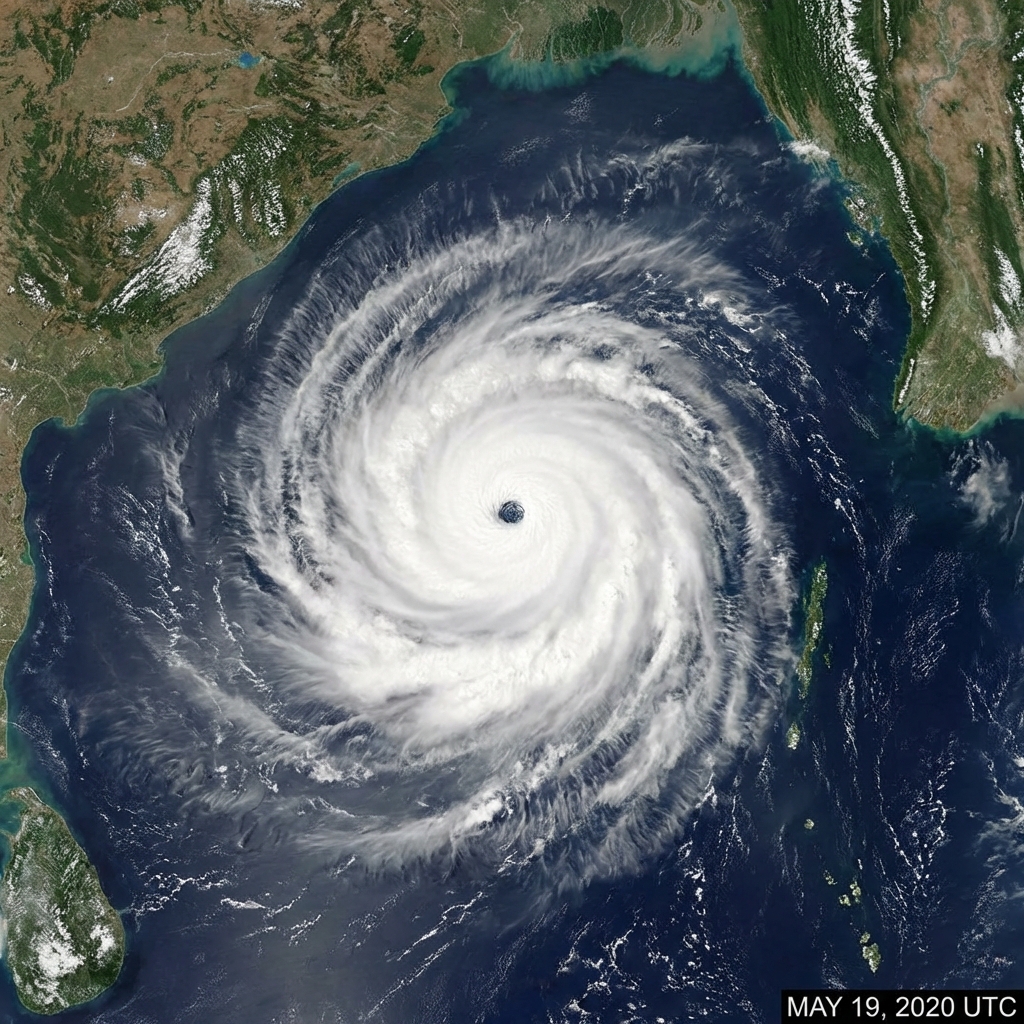
Amphan formed as a depression in the Bay of Bengal on 16 May 2020 and strengthened rapidly. It reached Super Cyclonic Storm strength with sustained winds of 240 km/h and a minimum pressure of 920 hPa, the first Super Cyclonic Storm in the Bay of Bengal since the Odisha Super Cyclone of 1999.
Weakening Before the Coast
Amphan weakened before it reached land. It crossed the coast on 20 May near Bakkhali in the Sundarbans, West Bengal, with sustained winds of about 155-165 km/h. That is a Very Severe Cyclonic Storm, not a Super Cyclonic Storm. Even so, the damage across the Sundarbans, Kolkata and the coast of Bangladesh was severe.
Evacuation During COVID-19
The storm came in the middle of the nationwide lockdown. Cyclone shelters normally work by packing people together, which was exactly what health rules discouraged. Authorities in India and Bangladesh moved more than three million people to safety, using more shelters with spacing between people and masks, and providing extra rooms and screening.
The Toll
About 133 people died in total, including at least 72 in West Bengal and about 20 in Bangladesh according to reported counts. The damage was about 15.5 billion US dollars, making Amphan the second-costliest cyclone ever recorded in the north Indian Ocean.
What It Showed
- Accurate forecasts and large evacuations keep deaths far below what a storm of this strength once caused.
- Damage to property and livelihoods can still be enormous, even when lives are saved.
- A storm's strength at sea is not its strength at landfall, so both numbers matter.
See the numbers on the Amphan archive page, or read how Super Cyclones are defined on the Super Cyclones page.