The 1999 Odisha Super Cyclone: The Storm That Changed India
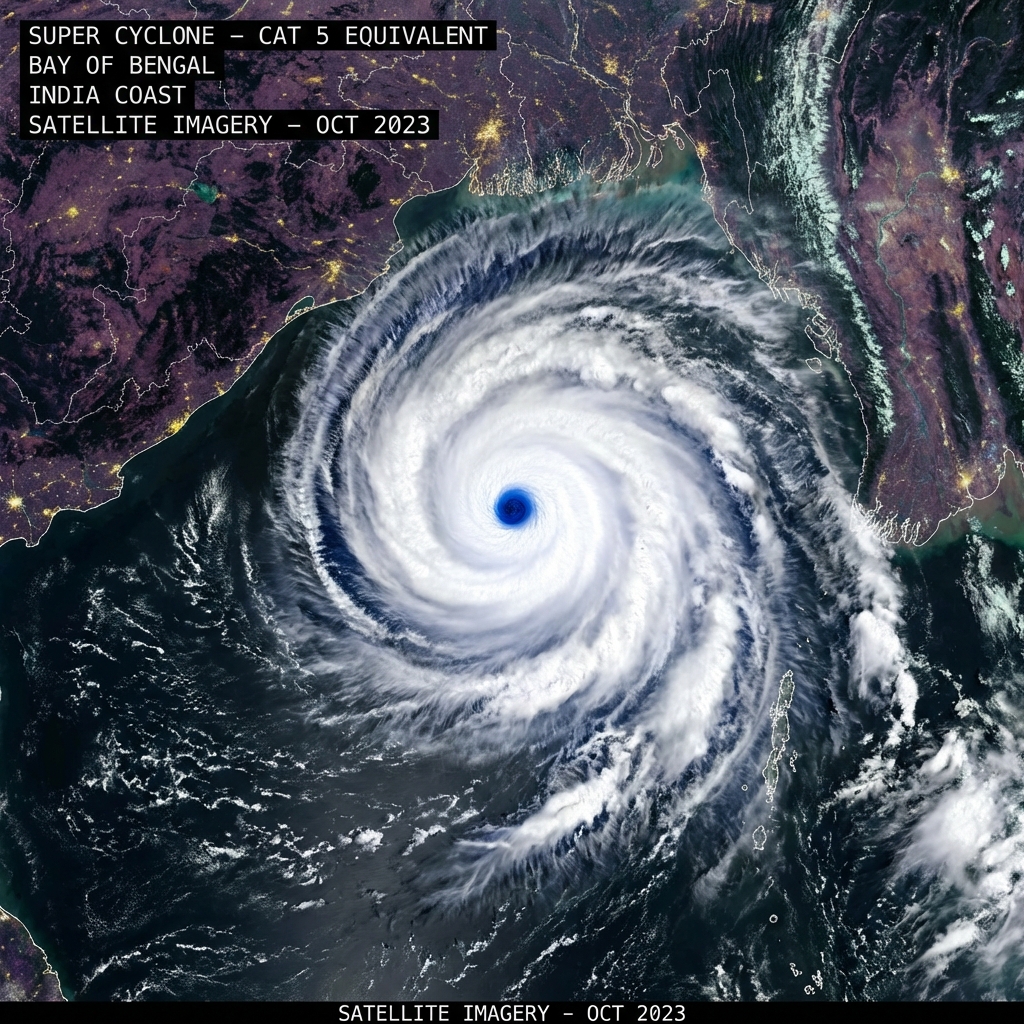
A Storm Without a Name
Cyclones in the north Indian Ocean were not routinely named in 1999, so this one is remembered by its place and its size: the Odisha Super Cyclone. It formed as a depression in the Bay of Bengal on 25 October 1999 and grew quickly over warm water.
The Strongest on Record
At its peak the storm had sustained winds of 260 km/h and a central pressure of 912 hPa, the strongest tropical cyclone ever recorded in the north Indian Ocean. It crossed the Odisha coast near Paradip on 29 October at full strength, with estimated gusts of around 300 km/h. The instruments in the area failed during landfall, so peak gust figures are estimates.
Why It Was So Deadly
- Extreme wind: Winds at Super Cyclonic Storm strength destroyed houses, trees and power lines across the coast.
- Storm surge: The sea was driven far inland across a low, flat coastline.
- A slow storm: After landfall the cyclone stalled near the coast for a long time, so the damage kept building.
- Limited preparation: Few cyclone shelters existed, and warnings did not reach many villages in time.
In total, 9,887 people died and the damage was about 4.44 billion US dollars. Coastal districts such as Jagatsinghpur and Kendrapara were among the worst hit.
What Changed
The disaster became a turning point in how India handles cyclones:
- Odisha created its own State Disaster Management Authority in the aftermath.
- A network of multipurpose cyclone shelters was built along the coast.
- Forecasting and warning systems were upgraded, with much more attention on getting warnings to the last village.
The result showed when Phailin (2013) and Fani (2019) struck the same coast. Read the full comparison in Three Storms, One Coast.
See the Data
The full record, with the track, wind speed and impacts, is on the Odisha Super Cyclone archive page.