Cyclone Preparedness: A Complete Guide
Before the Cyclone Season
Know Your Risk
Understanding whether you live in a cyclone-prone area is the first step. Coastal regions in Odisha, Andhra Pradesh, Tamil Nadu, West Bengal, and Gujarat are particularly vulnerable. Check with your local disaster management authority for evacuation zones and shelter locations.
Create an Emergency Kit
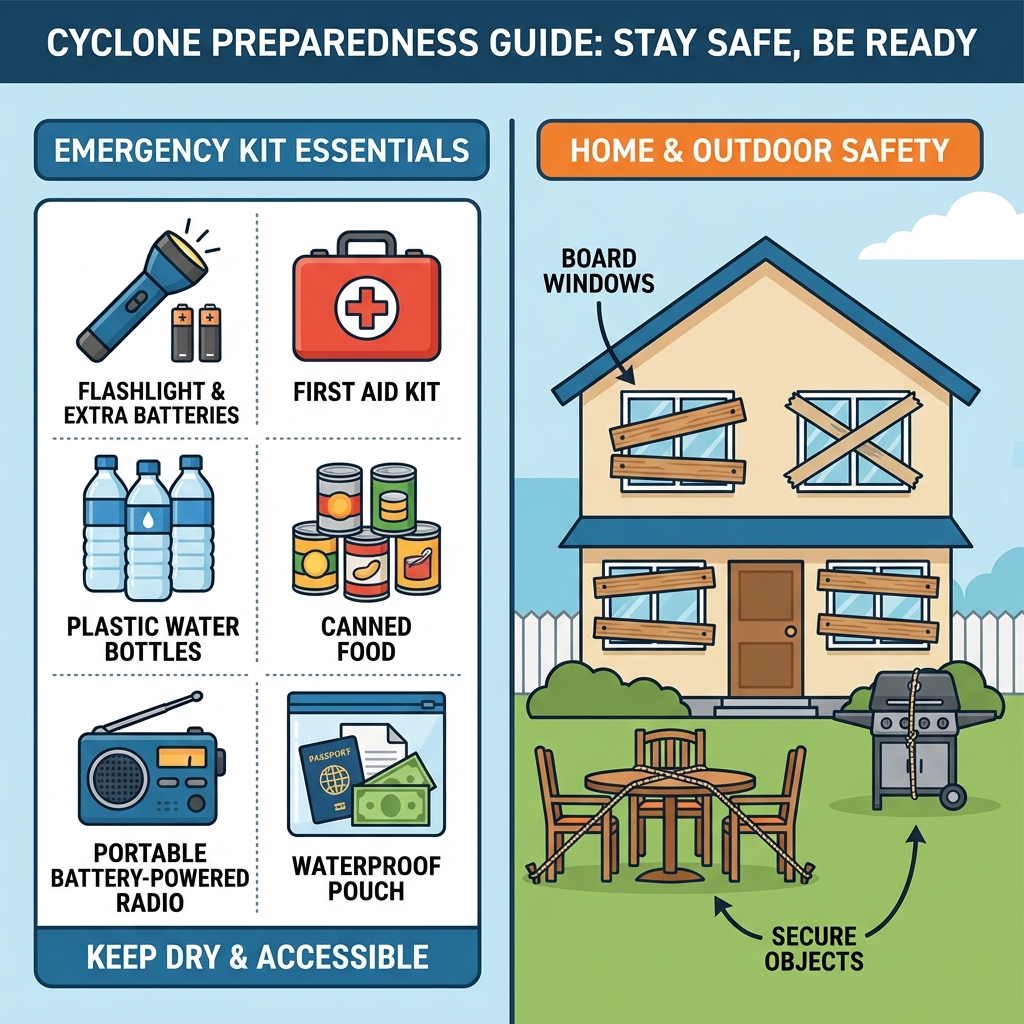
Your emergency kit should include:
- Non-perishable food for at least 3 days
- Water (1 gallon per person per day for 3 days)
- Battery-powered or hand-crank radio
- Flashlight and extra batteries
- First aid kit and essential medications
- Important documents in waterproof containers
- Cash and credit cards
- Mobile phone with chargers and backup battery
Prepare Your Home
- Install storm shutters or prepare plywood boards
- Clear gutters and drains
- Trim trees and secure loose outdoor items
- Know how to turn off utilities
- Consider flood insurance
When a Cyclone is Approaching
Monitor Official Sources
Follow updates from the India Meteorological Department (IMD) and local authorities. Don't rely on social media rumors. Official warnings are issued 48-72 hours before expected landfall.
Secure Your Property
- Bring outdoor furniture, decorations, and trash cans inside
- Cover windows with shutters or plywood
- Fill bathtubs and containers with water
- Charge all electronic devices
- Fill your car's gas tank
Evacuation
If authorities order an evacuation, leave immediately. Don't wait until the last minute. Take your emergency kit, important documents, and medications. Never try to ride out a major cyclone in a vulnerable area.
During the Cyclone
Stay Indoors
- Stay away from windows and glass doors
- Take shelter in a small interior room, closet, or hallway
- Close all interior doors and brace external doors
- If flooding threatens, move to higher floors
Beware of the Eye
The eye of the cyclone brings a temporary calm, but this is NOT the time to go outside. The other side of the eyewall will hit with equal or greater force, often from the opposite direction.
After the Cyclone
Stay Safe
- Wait for official all-clear before leaving shelter
- Avoid floodwaters - they may be contaminated or electrically charged
- Watch for debris and downed power lines
- Don't use candles - use flashlights to avoid fire risk
- Boil water until authorities say it's safe
Document Damage
Take photos of damage for insurance claims. Contact your insurance company as soon as possible. Keep receipts for emergency expenses.
Community Preparedness
Individual preparedness is important, but community resilience saves lives. Participate in local disaster drills, help elderly or disabled neighbors prepare, and share accurate information during emergencies.
Conclusion
Cyclones are a fact of life in coastal India, but preparedness can dramatically reduce their impact. Start preparing today - don't wait until a cyclone is approaching. Your life and the lives of your loved ones may depend on it.