Cyclone Emergency Kit Checklist for Indian Homes
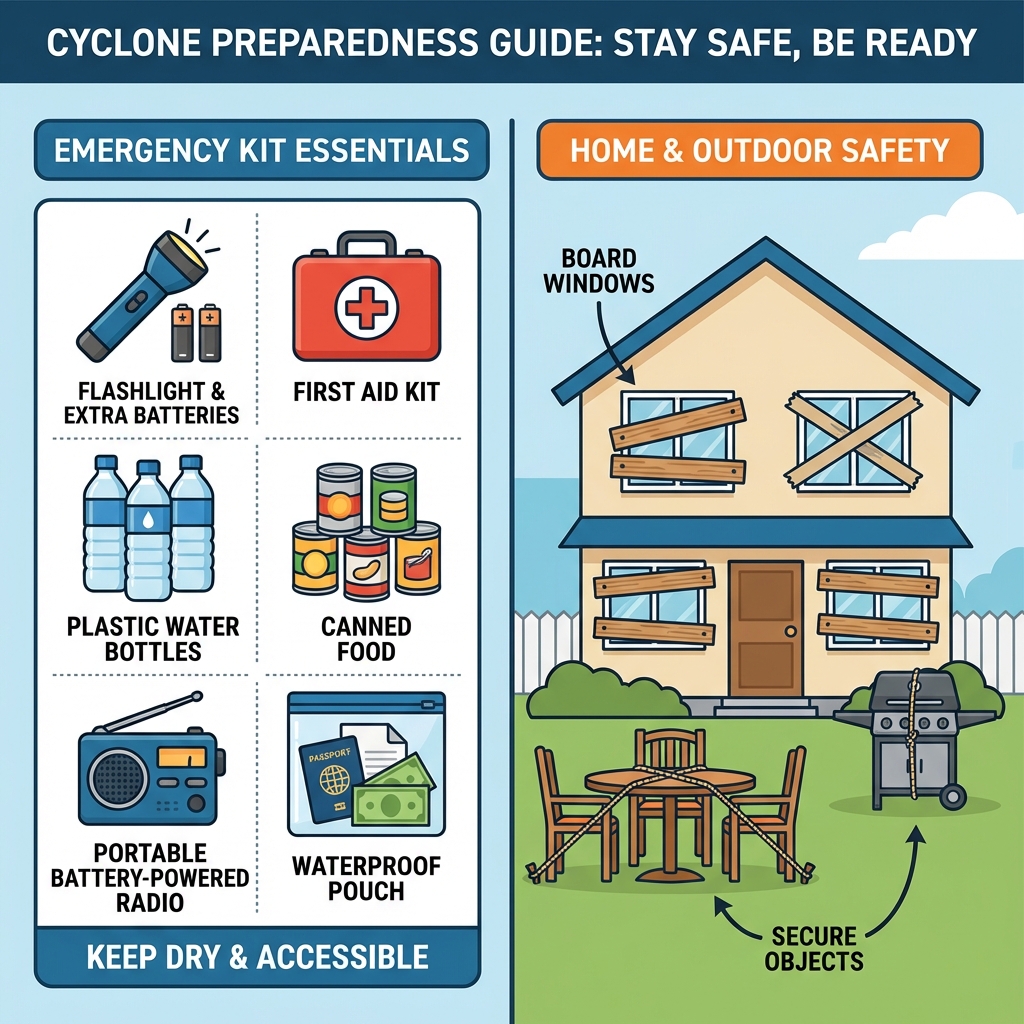
When a cyclone crosses the coast, the first thing to fail is usually electricity. Within hours, the water pump stops, mobile towers run out of backup power, ATMs shut down, shops close and roads are blocked by fallen trees. For the next two to five days, your family will live on whatever you packed before the storm.
This checklist is written for Indian homes, from a flat in Visakhapatnam or Chennai to a kutcha house in coastal Odisha, the Sundarbans or Kutch. It tells you exactly what to pack, how much of it, and why. Print it, tick it off, and keep the kit ready before the cyclone seasons of April to June and October to December.
The 72-Hour Rule
Disaster managers plan for families to look after themselves for at least 72 hours after a cyclone. That is how long it often takes for relief teams to clear roads and reach every village. After a very severe cyclone, or if you live on an island, in a delta or at the end of a long road, plan for 5 to 7 days.
You actually need two kits:
- A go-bag: one backpack per person that you can pick up in two minutes if you are told to move to a cyclone shelter.
- A stay-home kit: bigger supplies of water, food and power for the days after the storm if your home is safe to stay in.
1. Water
Water is the most important item and the one people underestimate most.
| Item | How much | Why |
|---|---|---|
| Drinking water | 3 litres per person per day, for at least 3 days | Taps and borewell pumps stop when power fails, and flood water contaminates wells |
| Washing and toilet water | Fill buckets, drums and the overhead tank | Hygiene prevents diarrhoea and skin infections after the storm |
| Chlorine tablets or bleaching powder | 1 strip or a small packet | To make stored or collected water safe to drink |
| ORS packets | 10 or more | Dehydration and diarrhoea are common after cyclones |
A family of four needs about 36 litres of drinking water for three days. That is two 20-litre cans. Fill them when IMD issues a Cyclone Alert, if not earlier.
2. Food That Needs No Cooking
Gas cylinders may need to be switched off, and you may be cooking in the dark. Pack food that is ready to eat, keeps for months and suits your family.
- Chura or poha (flattened rice), muri (puffed rice), roasted chana and peanuts
- Biscuits, rusk, khakhra, bread for the first day
- Jaggery, dates, dry fruits and energy bars for quick energy
- Ready-to-eat packs (upma, poha, dal-rice) that only need hot or cold water
- Milk powder, tea, sugar and a small packet of salt
- Baby food or formula, if you have a baby, for at least 5 days
- A can opener, steel plates, glasses and spoons
Choose food your family already eats. A cyclone is not the time to discover that the children will not touch something.
3. Medicines and First Aid
Pharmacies and primary health centres may be closed or cut off for days. This part of the kit can save lives.
- Regular medicines for 7 days: for blood pressure, diabetes, thyroid, epilepsy, asthma or heart conditions. Keep the prescription with them.
- Paracetamol, an antacid, an anti-allergy tablet and medicine for loose motions
- Antiseptic liquid, cotton, bandages, sterile gauze, medical tape and a small pair of scissors
- Mosquito repellent and a mosquito net, because stagnant water breeds mosquitoes within days
- Hand sanitiser, soap, sanitary pads and diapers
- Spare spectacles, hearing aid batteries, and insulin with a cool pack if needed
4. Documents and Money
After a cyclone, you may need documents to claim compensation, get relief rations, or prove ownership of land and property.
- Aadhaar, ration card, voter ID and PAN card
- Bank passbook, cheque book, insurance policies (crop, house, life, health and boat)
- Land records, patta or house papers
- School and college certificates, and medical records
- A paper list of important phone numbers
Put the originals in a zip-lock bag, then put that inside another plastic bag. Keep photocopies in a separate place, and upload scans to DigiLocker before the season starts.
Cash: keep enough for at least a week of expenses, in small notes. When power and mobile networks fail, UPI, cards and ATMs stop working too.
5. Light, Power and Communication
Information is a survival tool. Your phone is your link to warnings, family and rescue teams, so plan to keep it alive for three days.
- Power banks: at least one 10,000 mAh or larger per family, charged to 100%
- Torches: one per person, with spare batteries, or rechargeable LED lamps
- A battery or hand-crank radio: All India Radio keeps broadcasting warnings when mobile data is down
- A basic keypad phone with a separate SIM, if you have one, because its battery lasts for days
- Charging cables and a car charger if you have a vehicle
To save phone battery, turn on battery saver, lower the brightness, close apps you are not using, and switch to 2G or turn on airplane mode when you don't need the network. Keep the emergency helpline numbers written on paper as well.
6. Tools and Shelter Items
- A whistle for each family member, to call for help if trapped
- Strong rope (10-15 metres) and a knife or multi-tool
- A tarpaulin or thick plastic sheet to cover a damaged roof or protect belongings
- Matches or a lighter in a waterproof box
- Large plastic bags and zip-lock bags
- Gloves and strong footwear, for walking on broken glass, tin sheets and debris
- A bucket with a lid and garbage bags, for use as a toilet if needed
7. Clothes and Bedding
- Two sets of clothes per person, packed in plastic so they stay dry
- A light blanket or bedsheet per person
- A raincoat or poncho
- Slippers and closed shoes
Extra Items for Special Needs
Babies and Small Children
Formula or baby food, feeding bottles, diapers, wet wipes, a change of clothes for every day, a favourite toy or book, and children's paracetamol syrup. Write the parents' names and phone numbers on a card in each child's pocket in case you are separated in a shelter.
Elderly and Disabled Family Members
Medicines, walking sticks, wheelchair, adult diapers, spare spectacles and hearing aid batteries. If someone is bedridden or uses oxygen, tell your ward member, village sarpanch or local officials before the storm so they can plan an early evacuation.
Pregnant Women
Pack the antenatal card and hospital papers. In the last weeks of pregnancy, move to a relative's house near a hospital, or to a hospital, as soon as a Cyclone Alert is issued. Ambulance service (102 or 108) may not reach you during the storm.
Pets and Livestock
A leash, food for 3 days, a water bowl and any medicines. For cattle, store fodder in a raised dry place, and never tie animals up in a low-lying shed during a cyclone. Untied animals have a much better chance of surviving.
Printable Go-Bag Checklist
One backpack per person, ready to pick up in two minutes:
- ☐ 2 litres of drinking water
- ☐ Dry snacks for one day
- ☐ Regular medicines for 7 days and prescriptions
- ☐ Document pouch (or photocopies)
- ☐ Cash in small notes
- ☐ Phone, charger and a charged power bank
- ☐ Torch with spare batteries
- ☐ Whistle
- ☐ One set of clothes, a towel and a raincoat
- ☐ Toothbrush, soap, sanitary pads
- ☐ Paper list of phone numbers
When to Prepare What
IMD warns about cyclones in stages, as we explain in IMD Cyclone Warnings Explained. Here is what to do at each stage:
| Stage | Roughly when | What to do with your kit |
|---|---|---|
| Start of season | April and October | Build or check the kit, replace expired food and medicines, test torches |
| Pre-Cyclone Watch | About 72 hours before | Refill medicines, withdraw cash, buy extra water and food |
| Cyclone Alert | About 48 hours before | Fill water cans and buckets, charge all devices and power banks, pack go-bags |
| Cyclone Warning | About 24 hours before | Keep go-bags by the door, move the stay-home kit to your safest room, follow evacuation orders |
Common Mistakes to Avoid
- Waiting until the last day: shops sell out of water, candles, batteries and power banks fast once a warning is issued.
- Relying only on UPI: digital payments stop when the network goes down.
- Storing the kit on the floor: if water enters the house, it is ruined. Keep it on a high shelf.
- Forgetting medicines: missing blood pressure or diabetes medicine for several days can be dangerous.
- Never checking the kit: food and medicines expire and batteries go flat. Check twice a year.
Keep Going
A kit is only one part of being ready. Read our complete Cyclone Preparedness Guide and What to Do During a Cyclone, and follow live updates on the Active Systems page when a storm is forming.
Indian Cyclones is an independent explainer, not an official warning service. Always follow the India Meteorological Department (IMD) and your district administration.