Family Cyclone Emergency Plan Checklist
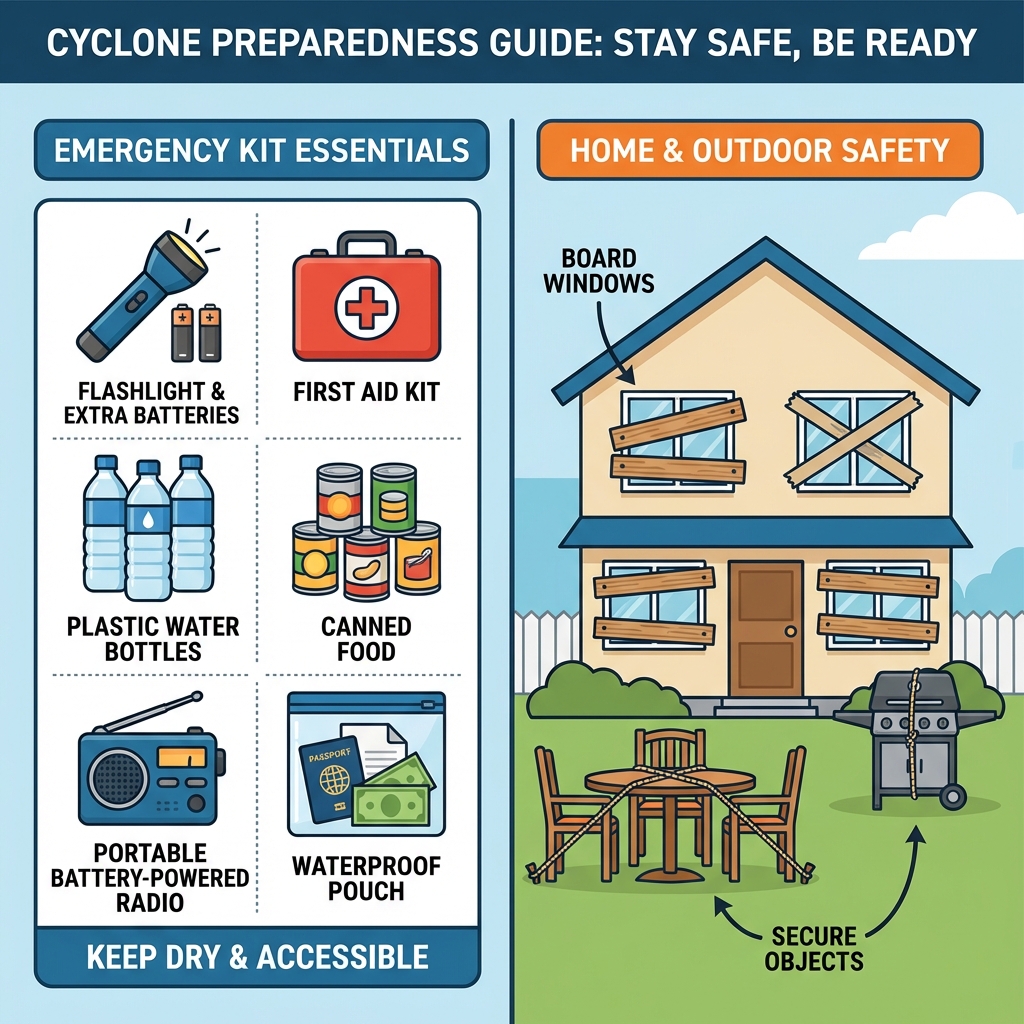
When a cyclone hits, families get separated: one parent is at work, the children are at school, grandparents live in the next village, and the phone network is down. A family plan made calmly in advance means everyone knows what to do without needing to talk to each other.
You can make this plan in one evening. Sit together, go through the checklist, and write the answers down.
Step 1: Know Your Risk
- ☐ Is our home within a few kilometres of the sea, a river mouth or a creek?
- ☐ Is our area low-lying or does it flood in heavy rain?
- ☐ Is our house kutcha, thatched, or tin-roofed?
- ☐ Is our village or ward in an official evacuation zone? (Ask the panchayat, ward office or tehsil)
If you answered yes to any of these, your plan should assume you will evacuate for any severe cyclone.
Step 2: Choose Meeting Points
- ☐ Near home: a spot just outside the house, for example the temple or a big tree, in case you must leave suddenly
- ☐ In the area: the nearest cyclone shelter or a strong building such as a school, if you cannot get home
- ☐ Outside the area: a relative's house in a safer town, if the whole area is evacuated
- ☐ Everyone, including children, knows all three places
Step 3: Pick an Outside Contact
- ☐ Choose one relative or friend who lives far from the coast
- ☐ Every family member saves this number and writes it on paper
- ☐ Agree that everyone will call or message this person to say they are safe
- ☐ Tell the contact person they are part of your plan
Text messages often get through when calls do not. Keep messages short: "Safe at shelter, all 4 of us, Ramu."
Step 4: Decide Who Does What
Write down a name next to each job, so nothing is forgotten in a rush.
| Job | Responsible person |
|---|---|
| Following IMD warnings and news | __________ |
| Picking up children from school | __________ |
| Helping elderly or disabled family members | __________ |
| Carrying documents and cash | __________ |
| Carrying medicines and first aid | __________ |
| Turning off power, gas and water | __________ |
| Pets and livestock | __________ |
| Checking on neighbours who live alone | __________ |
- ☐ Name a backup person for each job in case someone is away
Step 5: Plan for Family Members With Extra Needs
Elderly, Sick and Disabled Members
- ☐ Plan to move them early, at the Cyclone Alert stage, not the last minute
- ☐ Keep 7 days of medicines, prescriptions, spectacles and hearing aid batteries ready
- ☐ Arrange transport in advance if they cannot walk to the shelter
- ☐ If someone uses oxygen, dialysis or is bedridden, inform the ward member, ASHA worker or local officials before the season
Babies and Children
- ☐ Pack baby food, formula, bottles and diapers for 5 days
- ☐ Know your children's school's cyclone plan and when schools will close
- ☐ Make a contact card for each child (see Step 6)
- ☐ Explain the plan to children calmly so they are less scared
Pregnant Women
- ☐ Keep the antenatal card and hospital papers in the document pouch
- ☐ In the last month, plan to stay near a hospital once a Cyclone Alert is issued
Pets and Cattle
- ☐ Follow the pets and livestock checklist
Step 6: Make Contact Cards
Make one card for every family member, especially children and elderly people. Put it in a small plastic cover and keep it in their pocket or go-bag.
- ☐ Full name
- ☐ Home address and village or ward
- ☐ Two family phone numbers
- ☐ Outside contact number
- ☐ Blood group, medical conditions, allergies and medicines
Step 7: Write Down Emergency Numbers
- ☐ 112: national emergency
- ☐ 1077: district control room
- ☐ 1070: state emergency operations centre
- ☐ 108: ambulance
- ☐ Local police station, nearest hospital, electricity office
- ☐ Ward member, sarpanch or village volunteer
See the full list in Cyclone Emergency Helplines and Apps.
Step 8: Know Your Evacuation Plan
- ☐ Location of the nearest cyclone shelter
- ☐ Two routes to it, in case one floods
- ☐ How you will travel: walking, own vehicle, or government transport
- ☐ Go through the full evacuation readiness checklist
Step 9: Prepare Kits and Documents
- ☐ One go-bag per person and a stay-home kit (see the emergency kit checklist)
- ☐ Documents in a waterproof pouch, and scans in DigiLocker
- ☐ Everyone knows where the kit and documents are kept
Step 10: Practise and Review
- ☐ Walk to the cyclone shelter once together
- ☐ Ask the children where the meeting points are and who to call
- ☐ Review the plan every April and October, and when anything changes (new baby, new job, moving house)
- ☐ Stick a copy of the plan inside a cupboard door
Help Your Neighbours
Some people cannot prepare alone: elderly people living alone, widows, people with disabilities, migrant workers who do not know the area. Include at least one neighbour in your plan. In past cyclones in Odisha and Andhra Pradesh, neighbours and village volunteers have saved many lives by making sure nobody was left behind.
When a storm is approaching, follow the 72-hour countdown checklist.
Indian Cyclones is an independent explainer, not an official warning service. Always follow IMD and your district administration.